
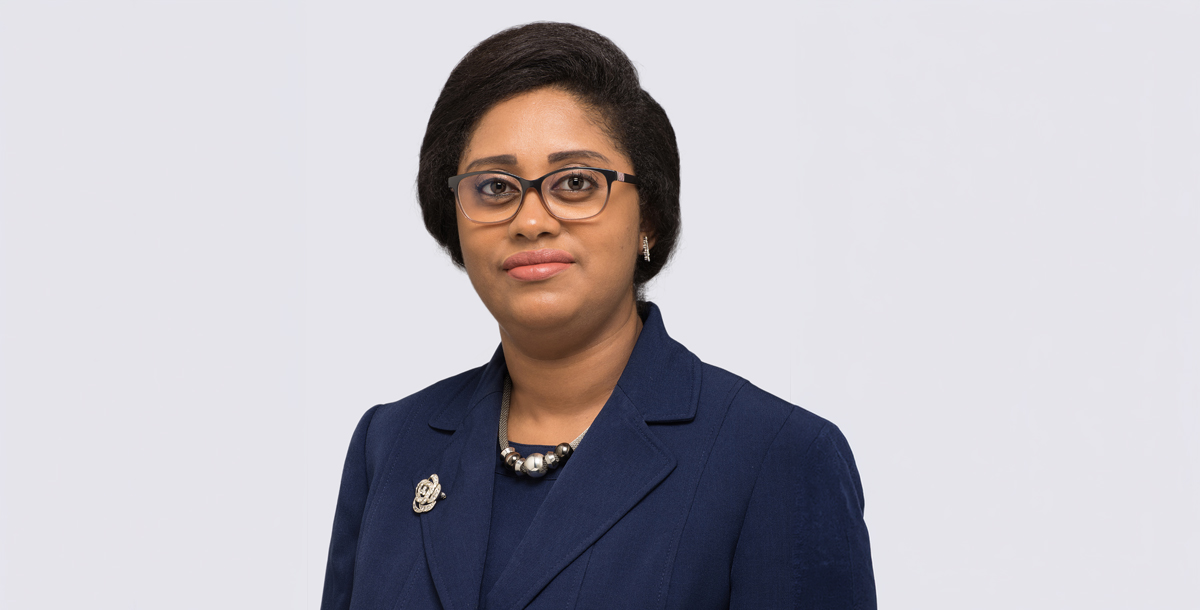
30 Jul Interview with H. E. Carla Alexandra Oreste do Rosário Fernandes Louveira, Minister of Finance, Mozambique
The IMF has appealed to Mozambique to implement early fiscal consolidation while also protecting the most vulnerable. What are the key measures in the 2025 Budget to stabilize public finances without compromising essential social spending?
As we know, we are in a new governance cycle. The government has approved a development strategy for the next 20 years. This is also linked to a five-year government plan, based on the 20-year targets. All the coordination we are undertaking with our cooperation partners, especially multilateral institutions, takes into account both the government’s 20-year strategic plan and the five-year plan.
In the specific case of the International Monetary Fund, we previously had a program which, at the beginning of this new governance cycle, we managed to conclude. We are now initiating negotiations for a new program. The missions we are receiving from the IMF are under Article IV, with a view to presenting and designing a program aligned with the government’s new targets, in line with both the 20-year and 5-year strategies, but above all to respond to the challenges arising from the tensions and shocks the country has experienced in recent times.
The fiscal consolidation we are designing with the IMF is based on three main pillars. The first pillar is revenue oriented and aims to broaden the tax base. Within this revenue pillar, the government has incorporated into both the Economic and Social Plan and the state budget whether for 2025, the first year of the governance cycle, or for 2026 actions aimed at reforming the fiscal framework. This fiscal reform includes measures such as revising the customs tariff code, the excise tax code, corporate and personal income taxes, as well as VAT. A key focus of this reform is ensuring the taxation of the digital economy. In parallel, the digitalization of the tax payment system is also underway as part of this reform pillar. These actions aim to ensure alignment with regional policies, such as adjusting the customs tariff with tariff reduction agreements within the Southern African Development Community and across Africa. Mozambique is a signatory to the African Continental Free Trade Area and has agreed on a tariff reduction mechanism with the region to reduce, unify and harmonize tariffs.
At the same time, these measures support the country’s energy transition strategy, which aims to reduce CO₂ and carbon emissions. This requires fiscal instruments that lower taxes on production that contributes to emission reductions. In this regard, electric vehicles are a key example. Through customs tariff reform, we have reduced import duties on electric vehicles from 20% to 5% and imports of electric vehicles with a capacity of up to 40 seats have been exempted. This represents a business opportunity for global investors to explore this segment in our country, as the tax burden is now minimal. This is a major attraction within the fiscal reform agenda, alongside the taxation of the digital economy.
The second pillar of fiscal consolidation concerns the rationalization of public expenditure. The Government of Mozambique is focused on improving control over public spending. On one hand, efforts are being made to rationalize the wage bill, covering salaries and remuneration, through in-depth audits and verification processes, including proof of life checks for public employees, as well as reviewing potential allowances to ensure better control. Another key measure is the creation of a centralized state procurement agency, a new institution planned under the current governance program. This will generate economies of scale and reduce costs arising from fragmented contracting across the public administration. The agency will centralize payments and integrate electronic public procurement (e-procurement).
The third and final pillar of fiscal consolidation relates to public debt, ensuring its sustainability. In this regard, the government has approved a public debt management strategy for the next three years, covering the period from 2025 to 2029, outlining actions to ensure debt sustainability. It is also important to note that the actions we are coordinating in monitoring and implementing fiscal consolidation are not limited to our work with the IMF, but also involve other multilateral partners, such as the World Bank, particularly through Development Policy Operations.
Recently, on January 22 of this year, the World Bank’s Board approved a new partnership framework with Mozambique, the Country Partnership Framework for the next five years, valued at up to $2.5 billion in potential disbursements.
A significant component for us is the Prevention and Resilience Allocation which may range between $400 million and $450 million, aimed at supporting reforms addressing the impacts of climate change in our country. This partnership package already defines strategic areas aligned with the country’s new development vision, including energy, tourism, development, human capital and agribusiness. This is the strategic framework of our partnership with the fund and how we are designing our Economic and Social Plan and the state budget, incorporating the premises agreed with our international partners.
Following recent budget deviations and debt reprofiling operations, how do you plan to rebuild investor confidence and what role do you foresee for a new IMF program in your medium-term debt strategy?
We are working to strengthen the architecture of trust and the business environment with our key investors and this effort has two main facets. The first concerns the integrity of the financial sector, with the aim of creating a risk-free environment for our financial system in relation to international financial institutions. In this context, Mozambique worked towards its removal from the gray list of the Financial Action Task Force (FATF).
In 2025, a FATF evaluation team visited our country, conducting assessments across all strategic sectors involved in combating money laundering and terrorist financing. Based on this visit and on the implementation of an action plan agreed with the FATF, which included 26 measures, the report submitted to the Board demonstrated that Mozambique had fulfilled all required actions. This culminated in the country’s removal from the gray list in October 2025. Subsequently, following the FATF’s decision, the EU undertook a similar process and, through a formal and public decision, removed Mozambique from its list of high-risk jurisdictions in November. This represents a first major step in strengthening confidence and relations with our investors.
The second area of focus is the sustainability of public debt. As mentioned earlier, we have already approved a public debt management strategy for the coming years, covering the period from 2025 to 2029. This strategy is aimed at restoring debt sustainability, meeting the financing needs of the Mozambican state and establishing a new risk profile for the country in relation to the financing instruments we use.
The strategy is divided into two main phases. The first phase, which we refer to as the debt stabilization and capital market development phase, covers the period from 2025 to 2027. During this phase, efforts are focused on extending the maturities of debt instruments and reprofiling public debt. It also includes diversifying financing instruments through greater use of capital markets, particularly the bond market, and identifying new sources of highly concessional financing.
It is important to note that this approach applies to both domestic and external borrowing. This phase maintains a strong emphasis on securing highly concessional financing to ensure that debt levels remain stable and do not place additional pressure on the public debt stock, which could undermine the primary objective of this phase: debt stability. It also predicts the introduction of innovative instruments, such as debt for investment and debt for climate swaps. These are mechanisms that several countries are already proposing to Mozambique, allowing debt to be exchanged for investments or climate-related initiatives.
The second phase, covering the period from 2028 to the end of the strategy in 2029, is what we call the sustainable financing phase. Building on the progress achieved in the first phase, this stage aims to create fiscal space to finance development and investment.
We have a 20-year development strategy and a 5-year government plan with concrete actions that require financing. The entire effort, both fiscal consolidation and ensuring debt stability and sustainability, is intended to create fiscal space to support development, social sectors, education, healthcare and social protection. In this phase, we expect improved fiscal space to help achieve these objectives. Naturally, we will continue to rely more heavily on bond market instruments, as they offer longer maturities and are generally aligned with best practices for financing the state budget. This is the framework we have designed for our public debt strategy and for strengthening engagement with our international financial partners.
How important is digitalization as a way to curb corruption, enhance transparency and strengthen investor confidence?
It is extremely important for us. That is precisely why, within our fiscal consolidation strategy, the fiscal reform package includes the digitalization of tax payment mechanisms. On the expenditure side, we are also establishing a centralized procurement agency that will operate through electronic public procurement, another digital mechanism.
In addition, wage bill control is being strengthened through a human resource management system that incorporates biometric proof of life verification. We aim to increasingly reduce discretion and human intervention in assessing processes and monitoring activities. The digitalization mechanisms we are implementing bring clear advantages in this regard.
Now that the finance portfolio has been separated from the economy, what were the reasons behind this decision and what benefits do you expect from this change?
The Ministry of Finance is, by nature, a cross-cutting ministry, it supports all sectors, whether economic, social, or related to governance. It plays a transversal role in supporting the entire system. In this context, responsibilities related more directly to economic sectors, such as industry, commerce and tourism, have been separated and now form a distinct sector. Other key economic areas, such as energy, transport and agriculture, are also overseen by dedicated ministries. The Ministry of Finance will now focus strictly on its core mandate.
Within our ministry, we now have three main macro goals. The first is to ensure macroeconomic stability. This involves proper coordination between fiscal policy and monetary policy. Fiscal policy is managed by the Ministry of Finance, while monetary policy is overseen by the Central Bank. The aim is to ensure that key macroeconomic indicators align with our stability targets, particularly exchange rate stability and price stability.
We are targeting single digit stability, which we have so far achieved. Inflation has remained below 4% per year and is stable. The exchange rate has also been stable and we maintain strong and sustainable levels of net international reserves by international standards, covering around four to five months of imports. We have also seen improvements in the current account balance. All of this falls within the scope of macroeconomic stability, one of our core pillars. Under our remit fall the Central Bank, the Tax Authority, pensions, insurance and the broader financial system, including insurance supervision and other related sectors.
The second major goal is to ensure the sustainability of public finances. This includes, first and foremost, fiscal consolidation, expanding the tax base on the revenue side, rationalizing expenditure and ensuring public debt sustainability, as previously discussed. At the same time, the Ministry of Finance plays a key role in financing the economy by coordinating with bilateral and multilateral partners. The ultimate objective is to structurally transform our economy, laying the foundations for wealth creation and economic independence. These goals are embedded in both the 20-year development strategy and the government’s 5-year plan.Within this same pillar of public finance sustainability, we also prioritize good governance and transparency throughout the entire budget execution cycle. This is why digitalization is so important, both on the revenue and expenditure sides.
The third goal is financial inclusion and integrity. On the inclusion side, the goal is to ensure that all citizens have access to financial services and products, whether banking or non-banking. On the integrity side, we aim to reduce the circulation of cash and ensure that financial flows increasingly take place within the formal financial system. This enhances our ability to monitor and prevent money laundering and terrorist financing, thereby strengthening the overall soundness of the financial system. In this way, we are now fully focused on our core mandates: macroeconomic stability, fiscal sustainability and financial inclusion and integrity.
How is the Ministry preparing the fiscal framework to responsibly manage future resource revenues and avoid the classic resource curse?
This is another highly relevant issue for us and we are addressing it through the Mozambique Sovereign Wealth Fund. With this fund, we believe that in the exploitation of natural resources, the country must create conditions for intergenerational savings, so that in the future, when these natural resources are depleted, we will still have the means to continue financing the state budget.
In this context, the country approved the law establishing the Mozambique Sovereign Wealth Fund, which has been in effect since 2024. This law was regulated by a decree also issued in 2024 and clearly sets out the objectives of the fund. One of these is to generate financial savings for the future, for both current and future generations, while also enabling the government to stabilize revenues, particularly in light of fluctuations in international LNG prices. Given that LNG prices can be volatile, it is essential to have a sovereign wealth fund that can offset deviations from what was initially projected in the state budget, while ensuring the prudent and sustainable management of gas revenues. The law explicitly establishes the allocation of LNG resource revenues: 40% is directed to the sovereign wealth fund, while 60% is allocated to the state budget.
Since the approval of the law, we began implementing this allocation rule in the 2025 fiscal cycle. Each year, we apply the 40/60 fiscal rule. For the 2025 state budget, approximately $45 million was allocated and for 2026 around $46 million, totaling roughly $90 million directed to the state budget. Regarding the sovereign wealth fund component, a cumulative total of $116 million had been allocated by 2025, which the Central Bank is capitalizing in line with the approved investment instruments. An additional $30.7 million is planned to be transferred to the fund in 2026.
It is important to note that robust verification and control mechanisms have been established for the management of the fund. In addition to the Central Bank, acting as the operational manager of the fund, there is a National Investment Committee composed of prominent national stakeholders, which advises the government on best practices for the fund’s investment policy. Alongside this, there is a supervisorycommittee appointed by parliament, responsible for overseeing the proper implementation of the sovereign wealth fund. In summary, the governance structure includes the Minister of Finance and the Central Bank as operational managers, an investment committee providing advisory support and a supervisory committee ensuring oversight under parliamentary guidance. There is also an external auditor responsible for auditing the fund’s accounts. The governance framework includes, beyond the law and its implementing decree, an investment policy and a management agreement between the Minister of Finance and the Governor of the Central Bank, which defines how these funds are to be invested internationally.
This framework allows us to ensure that both the 2025 and 2026 budgets include strategic and structural investments, particularly in infrastructure, financed through the 60% of LNG revenues allocated to development. These include projects such as bridges, dams, roads, schools and other large-scale initiatives that are already delivering results for our country.
Where do you see the greatest opportunities for Japanese public and private financing, whether through Japan International Cooperation Agency (JICA), development banks, or investors to support Mozambique’s priorities in infrastructure, energy and human capital?
We have identified a broad range of opportunities for Japanese investment. First, it is important to highlight the strong cooperation between Mozambique and Japan, which dates back to 1977. In 1993, Mozambique opened its embassy in Japan, followed by the opening of the Japanese embassy in Mozambique in 2000 and the establishment of JICA’s representation in our country in 2003.
Since then, our relationship, particularly through investment supported by JICA and the Japanese government, has been both significant and impactful in terms of investment and development. The main areas of focus have included energy, infrastructure, education and development corridors, where Japanese financing through JICA has played a particularly important role.
We highlight a financial portfolio of approximately $1.8 billion allocated to Mozambique, of which $0.4 billion corresponds to loans, $0.3 billion to technical assistance and $1.1 billion to grants. Key investments, particularly on the lending side, include the Maputo thermal power plant, financed with $123 million in 2014, and the second phase of the Port of Nacala, financed with approximately $209 million in 2015.
In addition, we are currently advancing negotiations on further financing, particularly in the form of loans, in sectors such as education and health. These include a $70 million package for the construction of district hospitals in Niassa, Nampula, Zambézia and Sofala. In education, we are working on projects involving universities and schools in Inhambane, Maputo and Mueda, valued at around $49 million and currently under negotiation. We also have a pipeline of initiatives related to climate change and the blue economy, with ongoing negotiations amounting to approximately $70 million with JICA.
We see this as a productive partnership that directly supports the country’s strategic objectives. Future areas of cooperation align with those identified in our 20-year development strategy and the government’s 5-year plan. These include energy, where our partnership with JICA is already well established, as well as development corridors in transport and logistics.
Tourism also remains a priority. Mozambique has a coastline of 1,800 kilometers and three development corridors in north, central and south, which enable efficient logistics for both coastal shipping and inland transport from the ports of Maputo, Beira and Nacala to hinterland countries. These include South Africa, Zambia and Botswana in the south; Zimbabwe in the central region; and Malawi and Tanzania in the north, with potential connections to the Lobito Corridor.
This broad potential, both in tourism and in development corridors, leads us to seek further investment in agribusiness and human capital. By human capital, we mean education, healthcare and the broader digitalization of the economy. These are the new priority areas where we see strong opportunities to deepen cooperation with Japan.
Could you leave a final message for the readers of this report?
We continue to view Japan as a strategic partner for Mozambique. There are significant investment opportunities in the Mozambican market across the sectors we have highlighted. We are committed to continuing our work with Japan to improve the business environment and to channel more investment into our country. This is the key message we would like to leave.
Sorry, the comment form is closed at this time.