
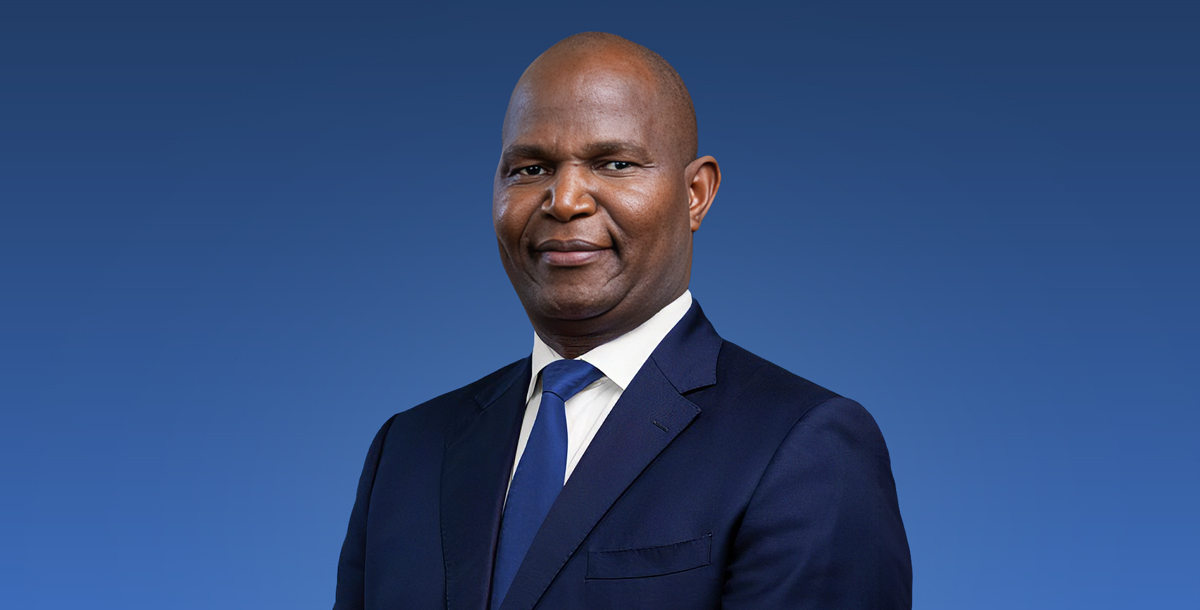
30 Jul Interview with H.E. Daniel Francisco Chapo, President of the Republic of Mozambique
In your inaugural speech, you highlighted the fight against corruption, promoting administrative efficiency and inclusive economic development as central pillars of your mandate. One year later, which reforms do you consider most emblematic of Mozambique’s new era?
There are several reforms underway. The first relates to the creation of a leaner and more efficient government, which was a campaign promise. We eliminated the positions of vice-ministers, appointed secretaries of state and merged several ministries, reducing their number. We had around 23 government structures including secretariats of state, and now we have only 18.
Another important initiative concerns the reorganization of the inspection system. There used to be several inspection bodies. To avoid fragmentation and excessive inspections, we have introduced a state inspector-general and we are going to reduce the number of inspection bodies to two: one responsible for state administration and one for finance.
In the past year, we have also introduced an important reform to promote decentralization, which will soon be approved by the legislature. At the provincial level, there were, and still are, effectively two governments. First, a secretary of state with executive powers and second an elected governor also with executive functions. The reform aims to remove the executive powers of the secretary of state, maintaining them only as a representative of the central government in the province. Meanwhile we are concentrating executive power with governors, who will have sole responsibility to promote local development, something fundamental for the country’s growth.
In addition, we created an Office for Reforms and Strategic Projects within the presidency, something unprecedented since independence. This office is tasked with overseeing reforms and monitoring major projects. Ministries will continue to manage their own projects, but a body was needed to facilitate coordination and monitoring. This structure is similar to what in other countries is called a ‘Delivery Unit’, focused on attracting investment and promoting business. We are opening the country to international investment. Under the new model, investors no longer need to go through multiple institutions. They now directly contact the Office for Reforms and Strategic Projects, which takes responsibility for overseeing and formalizing the entire process. The office undertakes work that had previously fallen to the investor, which we hope will increase efficiency and improve the business environment in Mozambique.
With these reforms, Mozambique is becoming more accessible and competitive and investors are finding it easier to do business here. There is a single point of contact through which everything is handled, allowing investors to track project progress remotely through updates provided by the office.
We have also implemented performance-based contracts with ministers and will soon do the same with secretaries of state. This mechanism allows for objective evaluation of leadership performance rather than empirical assessments. Each minister will commit to yearly objectives, creating a concrete basis for periodical evaluation. These are just some of the many reforms transforming perceptions of the country. Mozambique is gradually regaining the confidence of international financial markets and domestic and foreign investors, alike.
With improved security conditions in Cabo Delgado and the resumption of major LNG projects, how can you ensure these investments become a catalyst for national peace, local development, and social cohesion?
This is very important and is a central part of our strategic vision. The project was officially resumed on January 29. I personally met with Total’s president, Patrick Pouyanné, in Afungi, Cabo Delgado, in the district of Palma, to mark this resumption. As is widely known, the force majeure situation was lifted last year and an official ceremony was held to formally confirm the restart of the project.
Currently, around 5000 workers are on site and construction is progressing on all fronts. We are satisfied with the progress and pace of execution so far. In addition to Coral South (Coral Sul, an Eni project launched in 2022), the final investment decision for Coral North (also led by Eni), was signed last year. On January 16, the official launch ceremony took place in Korea for Mozambique’s second floating platform, intended for gas extraction in the Rovuma Basin.
If everything proceeds as planned, Exxon’s final investment decision should be announced in the second half of 2026. With all these projects coming online, Mozambique is already among the world’s top-ten gas producers and could rise to the top five. Investments are estimated at between $50 and $60 billion and we are committed to ensuring they materialize as quickly as possible.
We are particularly pleased that Japan is participating in the Total project as a shareholder. Japan has been one of Mozambique’s most important development partners and its presence reinforces the importance of this initiative. We want to continue working together to strengthen friendship and cooperation, confident that this project will further solidify our economic relations.
At the Tokyo International Conference on African Development (TICAD), you highlighted the Nacala Corridor and a “co-creation initiative for a common agenda” with Japan as drivers of regional trade. What results would you like to see from Japanese participation in these initiatives over the next five years?
Japan is a strategic partner for Mozambique. Through the Japan International Cooperation Agency (JICA), we have maintained a strong relationship and worked consistently on developing the Nacala Corridor. With JICA’s support, we had already begun an integrated development project for this corridor. After returning from TICAD, we reactivated it. We are now setting up an office in Nacala to finalize the project design together with JICA.
We are on the right track and we are on course to begin mobilizing teams to advance this initiative. For example, in the Nacala logistics corridor, which transports coal from the Moatize Basin to the port, Japan is already involved through Mitsui. Additionally, the Port of Nacala itself was rehabilitated and modernized with approximately $400 million of Japanese financing.
Japan is therefore strongly present in the port and corridor, and is well aware of its enormous potential. In December last year, a meeting took place in Maputo between the transport and logistics ministers of Mozambique, Malawi and Zambia to boost corridor development with Japanese support. We hope that these three countries will work together and extend the corridor to the Democratic Republic of the Congo.
Beyond logistics and tourism, agriculture is central for us, particularly in partnership with Japan. We want to revive an agricultural development project in the corridor to boost production of cereals, soybeans, beans and other crops like cashew nuts. This strategy aims to strengthen food security and expand export capacity.
How can Mozambique position itself as a logistics hub in Africa, particularly for the Japanese market?
Mozambique can position itself as a true logistics hub thanks to its development corridors and strategic location on the Indian Ocean. Japan shares his vision. I lived and worked in Nacala for about 10 years and witnessed the modernization of the port first hand. We want to expand railways, improve road transport and develop fuel pipelines to supply inland countries. These corridors go beyond ports and roads; they include energy infrastructure that strengthens regional integration and facilitates trade.
We are also prioritizing agriculture. Mozambique has vast arable land and excellent natural conditions. It can produce a wide range of goods, often organically, without heavy use of chemicals. We also have strong potential for livestock exports. With ports, railways, airports and pipelines, Mozambique can produce and export at scale. We invite investors — especially Japanese partners — to invest in these areas.
What role does digitalization play today and how does it influence future development?
Our vision is for Mozambique to become the Silicon Valley of southern Africa; a digital hub for the region. The biggest challenge is a reliable supply of electricity. Many neighboring countries face electricity shortages, but Mozambique has abundant hydropower resources. We also have gas reserves, solar potential with year-round sunshine and favorable conditions for wind energy. Although coal resources exist, the focus is shifting toward cleaner energy.
Digitalization is central to our anti-corruption efforts, as reducing face-to-face interactions in public services limits corrupt practices. We are digitizing public administration and moving towards establishing data centers to leverage our energy supply. This will allow Mozambique to store data for the region. Digital connectivity will make life easier for citizens and allow remote access to services. We are also involving the private sector, as the digital economy will be important to the future of our country. For the first time, we created a Ministry of Communications and Digital Transformation to accelerate this process, promote digital education and expand digital banking. Financial inclusion is a priority, and digitalization is key to achieving it. Reliable electricity and data centers are essential for Mozambique to become a regional digital hub and will also boost employment, entrepreneurship and inclusive development.
Your Excellency, what is your final message for our readers?
My final message is an invitation to domestic and foreign investors to invest in Mozambique. The country is implementing reforms to open it up to the world of business and to facilitate economic activity. Mozambique is now an investment destination. We have four gas projects in the Rovuma Basin, including Eni’s Coral South and Coral North, as well as projects with Total and Exxon. Total investments are estimated at $50-60 billion over the coming years.
Mozambique is a safe destination with an increasingly favorable business environment. Our priorities include agriculture, tourism, digitalization, logistics corridors, industrialization, infrastructure and becoming a regional energy hub. Mozambique offers legal security, stable investment conditions and the ability to repatriate profits. We have modern legislation and institutions that support business activity.
This is the right time to invest in Mozambique. The country is entering a new phase and those who hesitate may not find the same opportunities. Now is the time to participate in Mozambique’s growth and future.
Sorry, the comment form is closed at this time.