
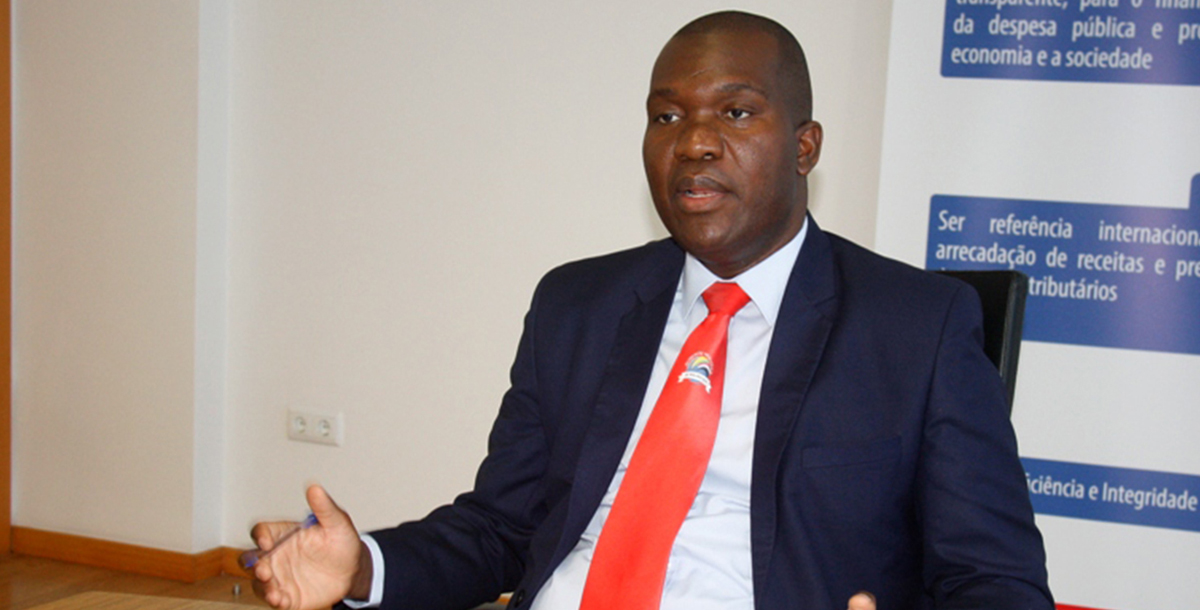
31 Jul Interview with Aníbal Joaquim Mbalango, President, Autoridade Tributária de Moçambique
Mozambique recorded a tax-to-GDP ratio around 21% in 2023 — above the reported African average near 16% — yet the policy pressure remains to broaden the base and improve revenue quality. What are your top three institutional priorities to raise sustainable revenues without increasing compliance friction for the formal sector?
We, the Tax Authority, are a body that was created to implement tax policy, meaning to control actions, inspections and the collection of state revenues. All state revenues are collected by the Tax Authority. It is an institution that was created in 2006 so is 20 years old this year. Therefore, it is already in a stage of maturity and has a broader vision for the future, in the sense of contributing even more to the financial sustainability of the Mozambican State.
Today the priority of a tax administration is to modernize itself. This refers to two vectors. The first modernization would be administrative modernization, the internal reorganization, in order to ensure that tax processes and procedures are aligned with current realities and that our human resources can perform their work better. It is necessary to create material conditions so that employees can work in an appropriate environment for better performance. But we also have to speak about modernization in another sense. We live today in a fully digital and technological world. We need to take a leap with regard to collection systems, modern collection systems that also incorporate artificial intelligence.
Last year we updated our tax legislation because one of the pressing issues was to capture the digital economy. If we want a digital economy, it means that we must also have modern digital methods of tax collection. To that end, last year in December we launched an international public tender through which we are looking for partners who will help us migrate to a new, more modern and more robust collection system.
We already have experience and taxation related to foreign trade, but what we want is an integrated system, a platform that, in addition to the one currently in use in the system for collecting taxes on foreign trade but which can also communicate with internal taxes and provide a general analysis and overall management of a given taxpayer. We want to modernize ourselves in such a way that, based on the technological resources currently available, we can properly manage taxpayers, ensure tax compliance and, above all, ensure the timely and voluntary fulfillment of tax obligations, without additional burdens for our taxpayers.
This is our vision: to strengthen human resources, invest in modernized infrastructures and technological infrastructures and have robust and intelligent collection systems that can allow us to improve compliance and voluntary fulfillment in a way that is easy and convenient for taxpayers.
The authority has intensified digital administration through platforms such as e-Declaração for filings, payments, and taxpayer monitoring. What measurable improvements are you targeting from digitalization in compliance rates, error reduction and time-to-comply?
This modernization has a single objective, which is to facilitate voluntary compliance, reduce inconsistencies in declarations and allow for more timely risk analysis. As a result, this will enable greater intervention by the administration at the appropriate time. Our expectation is to achieve at least revenue growth equivalent to 0.5% of GDP. In other words, we expect that the growth resulting from this reform and this modernization will be around 0.5% of GDP.
We also believe that this recovery in revenue will not be the result of additional burdens, but rather the result of verifying compliance and encouraging voluntary fulfillment of obligations. There are taxpayers who were not able to pay and we were also sometimes not able to conduct audits in time. However, we believe that with the digital tax collection system, a person, the taxpayer, while at home, will be able to meet their obligations. Through this, we expect this revenue growth.
How are you promoting tax education so that people understand the benefits of filing their returns on time and complying voluntarily? Are you running any public awareness or education campaigns?
Tax education has always been present in our work. It is one of the important aspects of the relationship between the administration and taxpayers. We regularly meet with taxpayers, mainly by segments, but we also go to informal sectors where we talk with people about the importance of paying taxes and about paying taxes voluntarily. We also educate people to understand that paying taxes is a legal duty that every citizen should fulfill.
Although it is clear that these actions alone produce results, they are not sufficient just to encourage taxpayers. People want to feel what they gain directly. There are several options that we are considering. One of them is the possibility of organizing a kind of lottery. We are also considering going to schools to engage children. In those visits we would organize small draws where children could bring proof of their parents’ tax payments. Through all these mechanisms we try to raise awareness across society as a whole.
Every year we also celebrate March 22, which we call the National Taxpayer Day. On that day we reward the best taxpayers by segment. We recognize taxpayers from large to small. We believe this has greatly motivated taxpayers to comply, but it is also important to motivate our employees. For this reason, the tax collection units that stand out the most receive certificates and awards, as do employees who distinguish themselves in the performance of their duties across the entire tax administration. We have been doing this regularly. It also motivates economic agents through the celebration of National Taxpayer Day. This year we are preparing something even more special because we will be celebrating 20 years of our existence.
Expanding and cleaning the taxpayer register directly affects informality and system equity. What is the authority’s strategy to bring new taxpayers into the formal net, especially micro and small firms, using proportionate and practical compliance pathways?
We have a campaign to assign a single taxpayer identification number, which we understand is a key indicator that a person has become part of the tax system. A person must have a tax identification number and tax education is a prerequisite for being a taxpayer.
At the same time, we also understood that some reforms in the legislation were necessary, particularly with regard to the simplified tax for small taxpayers. We made this tax more attractive for entering the tax system because, in order to attract a new taxpayer, we must reduce bureaucracy. There should not be excessive bureaucracy in order to be part of the system. We increased the business turnover threshold from $40,000 to just under $63,000. This will allow informal businesses to move more easily into the formal sector because they will have more space within the system. At the same time, we segmented taxation according to business turnover.
We have lower rates that are progressive, starting at 3% and going up to 15%, and they also vary according to the sector of activity. Sectors such as agriculture, fishing, livestock and small businesses continue to have a tax rate of 3%, which is the lowest rate in the system. In addition, because there were difficulties in transactions between informal and formal actors, we introduced a new possibility. A buyer that is a formal company can now easily conduct transactions with an informal operator and issue the invoice on behalf of the informal party, up to an annual amount of $31,000. In this way, both directly and indirectly, we will be able to capture informal actors, not because they necessarily lack the will to comply, but because when a formal company does business with them, the invoice will be issued in the company’s name and will include the relevant details. From that point, we will know that it is a person who provides services or sells goods but is not yet in the system, making it easier to engage with them and effectively carry out their registration.
The Single Electronic Window (Janela Única Electrónica) is a critical backbone for import/export clearance and customs revenue collection. What upgrades are planned to reduce clearance times, improve predictability and raise Mozambique’s trade competitiveness?
With regard to the Single Electronic Window, as I mentioned, it is the first modern collection system that Mozambique adopted and it has significantly facilitated external trade. Our customs clearance time has been substantially reduced. Today we clear shipments in fewer than 24 hours. This is already a considerable reduction. However, systems alone are not enough. It is also necessary to continue training our staff and further specialize them. That is why one of our plans is to strengthen the capacity of customs verifiers, because even if the declaration has already been submitted, if the official is not properly prepared to analyze the documents, the process may still take longer.
For this reason, we are creating a training plan to specialize customs officers working within the Single Window system. We are also working to ensure that staff become specialists in the physical verification of goods. At the same time, we are working on system packages within the customs Single Electronic Window that will help us, through artificial intelligence, to verify issues such as the pricing of goods so that we can assess their compliance. This will make the clearance process more reliable.
We are also planning to include other related services, such as non-intrusive inspection services like scanners, within the same system package. In addition, our electronic cargo tracking systems must also be integrated. This entire ecosystem needs to operate in a harmonized way so that customs clearance does not face any obstacles, whether for imports or even for transit operations. We are working on all these aspects in order to guarantee the reduction of goods clearance times and to make Mozambique a reliable trade corridor, because it will be fast, dynamic, and flexible.
How can the country serve as an entry point and logistical hub for goods coming from Asia? Considering all the corridors, particularly the transatlantic corridor via the port of Lobito in Angola, could Mozambique also act as a bridge to Europe?
In addition to these corridors, we need to look at issues related to single borders. Nowadays, there is even discussion about whether it should still be considered a single stop border or a single clearance point. These are issues we are considering; they are not off the table. Above all, it is essential to understand that if we want to be a corridor, we must substantially reduce clearance times. From the work we conducted in December, we observed that the average clearance time for transit operations, for example, for a truck in our transit facilities, can be managed in 30 minutes.
From there, our goal is competitiveness. Our transit could go elsewhere, but because we are nearby, with multiple border points, our priority is to reduce clearance times so that we become an attractive option.
Mozambique is preparing for future gas-linked revenues and mega-project ecosystems with extensive supplier chains. What institutional work is the tax authority doing now to administer sector obligations, audit supplier networks and ensure value capture without creating regulatory uncertainty?
Fortunately, we can say that we have been preparing since 2017. We have an Extractive Industry Taxation Unit, a team dedicated exclusively to the extractive sector, in particular the LNG and natural gas industry. This team already has substantial knowledge to meet the demands that are coming, both in terms of auditing, risk analysis and compliance verification.
At the same time, this team is also prepared to develop reform proposals, always keeping in mind what is best for the industry in order to attract more investment, but without compromising government revenue. Therefore, we see the resumption of these projects as a real opportunity to increase revenue, reiterating that we are already prepared.
We are also adjusting our systems to handle the natural gas sector differently, because it has its specificities depending on the contracts that were signed. Our expectation is to effectively maximize gains. The reform carried out in 2025 was also focused on the oil and gas industry because this is where we have expatriates and non-residents and it is necessary to ensure that they pay taxes in Mozambique.
Therefore, gas projects must start based on the experience and knowledge we have gained over time. Proposals have been developed so that the contribution of the gas industry is not only at the point of production but also along the supply chain. Reforms have been introduced regarding reimbursement procedures, making them more flexible, but also ensuring that VAT collection is better aligned with reality. In the past, some companies did not pay VAT, which reduced the State’s short-term financing capacity.
Now we have these companies under a VAT regime where everyone pays VAT and those entitled to reimbursement will receive it in a timely manner. Over time, this specialized team has reviewed these aspects, identified necessary changes and implemented them. From this year onward, our expectation is to see significantly higher government revenue coming from the natural gas industry.
Japan is recognized for high-efficiency tax administration, strong compliance culture and advanced digital solutions. Where would technical cooperation be most valuable — digital systems, specialist training, risk control, or process simplification for taxpayers?
We already have some experience with Japan at the level of the Authority, not directly, but indirectly. The specialized team from the extractive industry has already participated twice in training programs in Japan, each lasting more than 30 consecutive days. We have benefited in terms of the oil and gas value chain, so we have gained training and specialization in this area, including in pricing matters. Therefore, our expectation is that, as we move forward, this partnership with Japan will certainly be important for the training and capacity building of our staff. At the same time, we need to continue focusing on specialization, deepening our work on valuation and the control of renewable energy exports.
What would be the final message for the readers of this report and how would you like to invite them to come invest in Mozambique?
First, we would like to reiterate that Japanese companies are very welcome in Mozambique. We have already had Mitsui, both in the oil sector and in mining. We believe that Japanese companies have a very important approach. They are welcome here and they comply with our legislation.
Our expectation is that, with the technological capacity that Japan possesses, they will provide specialized technological services here in Mozambique, as well as help build the capacity of the Tax Authority in areas of artificial intelligence, particularly in tax collection. For this reason, the partnership with Japan will be very important to ensure all the gains we are anticipating.
We are expecting significant additional gains in the oil and gas sector, in both direct and indirect taxes of over $300 million per year. We want to move beyond the roughly 3% contribution that the oil and gas sector currently represents, which was substantially reduced due to the stoppage of the TotalEnergies project. Now, with the resumption of activities, with one project already in production and the other projects expected to restart soon, including the ExxonMobil onshore project and the projects from the latest block concessions that were awarded, we expect that, in the short term, over the next two years, the extractive sector’s contribution to tax revenue can return to around 10%.
In the medium term, we aim to reach levels similar to other countries, such as Angola, where the extractive industry contributes around 30%. Therefore, our goal is to achieve a 30% contribution from the extractive industry, but this will only be possible if companies continue to invest in Mozambique, bringing their knowledge and investment. Our commitment is clear. We will continue modernizing, broaden the tax base, and attract investment.
Sorry, the comment form is closed at this time.