
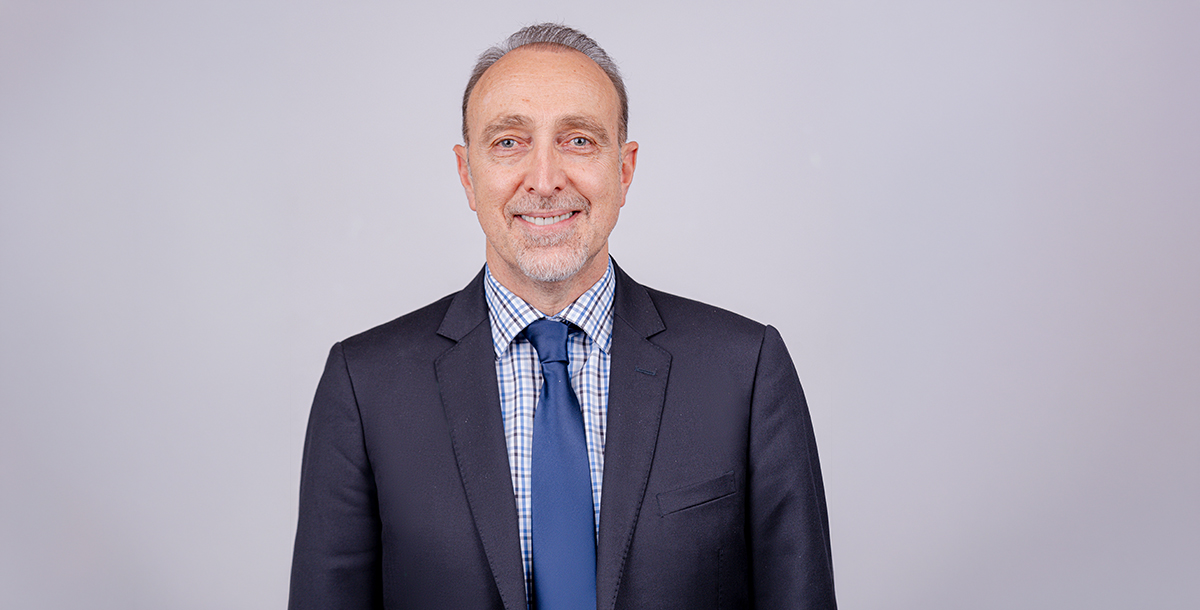
30 Jul Interview with Dane Kondić, President and Chief Executive Officer Linhas Aéreas de Moçambique (LAM)
What is your biggest challenge at the moment for LAM and for aviation in Mozambique in general?
Through my previous connections working at Etihad and the aviation industry, I met local shareholders who invited me here for three months, starting May last year and before the three months were over, all of the local stakeholders here were pretty keen and adamant that I should stay for the long term. For me, I saw a big challenge, which is always the thing that attracts me. What is the mission? The mission was to reestablish a national carrier for this country.
What wasn’t apparent to me at the time, when I became conscious of the physical size and the shape of the country and the fact that there aren’t enough roads, there isn’t enough rail, the only way to connect the country is by air. That was the secondary awakening that I had. The worst thing for the country is that the capital city is located in the very southernmost part of the country and that presents challenges.
I thought this was going to be a great challenge, professionally and personally. The story of aviation in Africa hasn’t been good. There aren’t too many success stories. There’s Ethiopian Airlines in the north. Royal Air Maroc and EgyptAir are doing a good job, but Egypt is such a big country and they’re connected more to the Middle East because of physical proximity. Airlink in South Africa is the only airline that’s been successful, but that’s a privately owned airline. If you look at all the government-owned airlines, they’ve all struggled. Personally, the challenge was to really rebuild a carrier in Africa. That was the draw for me. I wanted to tackle that and work with the colleagues here.
Any service business, like an airline, if you don’t have good people, you can’t make good outcomes. Inside this business, despite the performance of the airline, there are a lot of good people. For me, that’s what sealed the deal. The fact that there was this opportunity to come and do work here, to stop the bleeding and put a short-term plan in place, which we did, to reconnect the country and then the people here. It all came together for me and that’s why I decided to take the challenge.
My mission is to leave a healthy airline at the end of my tenure here. A healthy airline, what does that mean? An airline that serves its customers and serves the needs of the country. Today, it doesn’t do that and it doesn’t do it well either. They’re the two things for me that we have to make sure we service and serve the needs of our customers, but also deliver on the economic strategy of the country. Because of the physical size and the reopening of other industries now, you can’t move those if you don’t have the means to move people around.
How many aircraft do you have at the moment and what is your goal?
There’s a bit of a definitional challenge here because we own some aircraft, but those aircraft are not operational. If I go through how many we actually have, we have three Q400s, we have three ERJs and two 190s. That’s eight aircraft, but of those eight aircraft, only one is operational. We have seven of those aircraft, which are grounded for various reasons. We’ve had to supplement our flying with fleet and aircraft from other carriers and that type of arrangement is called ACMI leasing, or wet leasing, where we bring in capacity.
In Spain, there are a number of companies that do this. There’s a big company called Wamos Air, which provides its aircraft and crew to other carriers. They fly for LEVEL from Barcelona. They fly for Iberia as well. These are businesses, we call them no-brand businesses, because they provide their capacity to others, so they’re a B2B business. We have six of those aircraft flying. Together with the one aircraft that we have operational, we now have seven aircraft flying, but we’ll get some more back and they are currently being serviced.
Do you have any connections with Asia?
Not right now. We don’t fly anywhere outside of the country except to Johannesburg and Dar es Salaam. Of course, any country that has a national carrier always has ambitions to connect as many points as possible. We have to make sure that these routes serve a purpose in the mission and that we can fly them profitably, or if not profitably, then at least so that they meet a national goal or obligation. For me, when I look at what the government is doing and what they’re trying to do, there are certain countries and points to which we need connectivity. The Middle East is one. India and China are another. Turkey is also a big player in many things in Africa. We have historical ties with Portugal and TAP Air Portugal flies here. I want to see us forming cooperation or partnership agreements with some of these carriers so we can start getting back into these markets. It’s a bit like a weightlifter: you start with small weights and when you get stronger, you move to bigger weights. For us, the analogy is that we work in partnerships first and then, one day, hopefully, we can finally do our own flying.
South America, especially Brazil, is important because of the language, culture and business ties. We have short-term, medium-term and long-term ambitions. The short-term goal is to restore governance and accountability in our business, which has been lacking for many reasons. We now focus on the future and on building connectivity to the main points of the country. As we move forward, we will expand those connections within the region and link the region to tourist and business destinations. The longer-term goal is to look at medium or long-haul flights. We aim to build that first via partnerships and eventually with our own aircraft. That’s the smart way to rebuild a healthy business. It’s easy to spend money, but much harder to make money.
How are you going to move forward with the digitization process, not only to make your company more modern, fast and efficient, but also to improve the client experience within the airline?
They’re all important goals, but I have to say that our prioritization, when we talk about technology, is clear: for us, technology is aircraft. If you ask customers whether they want connectivity on board or aircraft that can actually fly, you know what they’re going to say. Today, there are still many major airlines that don’t have in-flight connectivity. Those things matter, yes, but we have more realistic ambitions.
First is to invest in the fleet and provide connectivity. We also need to create better digital engagement with our customers. One of the things we’ve been working on is our B2C proposition: website, social media and all those channels. These are important because we want people to transact directly with us instead of going through travel agents. We are assessing all of this to determine investment priorities. We also have many legacy platforms and technologies. When you have so many things to do, it’s never easy because there’s never enough money to do everything you want. We have to be realistic and honest, focusing first on rebuilding the essence of the company: the customer proposition and the network. Once that is solid, we can build our guest experience proposition.
Customer experience hasn’t been at the center of what we do. We would rather do a smaller number of things well than try to do 100 things poorly. Less is more, as they say. Pick three strategic initiatives, do them well and then move on to the next ones. We need to get better at engaging customers because communication hasn’t been a strong point. We are working on that internally, but it comes down to a cultural reset within the company. That’s a big challenge. Initially, there will be more bad days than good days, but you have to stay focused on the destination. For me, these small, focused initiatives are what start to make a real difference for our customer base.
Is sustainability on your agenda at the moment?
Everything we do aligns with government ambitions and targets. Africa needs some leeway on many of these matters. It’s very easy for developed economies to preach sustainability. Other countries can adopt new technologies, but here, we don’t. When people from the West or wealthier economies start preaching these things here, I feel they aren’t always sincere. I understand the importance of sustainability, but those economies are much bigger emitters than Africa. African economies need room to develop first. Once they develop, then you can start saying, ‘hey, let’s think about all these things.’
Do you work with authorities on promoting Mozambique internationally?
These are all things we now need to put on the table to figure out how to make our dollars and their dollars work together, so that we can promote and do things. The challenge here is that if you’re not connected, you can’t spend money in certain markets or on certain media assets to promote. Our initial catchment is Southern Africa. We have a lot of airlines from South Africa that fly here and we have others in the region as well. These are the markets that are easiest to reach. As the airline develops a vision and strategy for which other markets we want to target, we will go to the government and propose spending a little money, either above the line or below the line, depending on the approach, the message and how we want to communicate it.
There is no brand around the country. This is one of the points I made at the tourism conference. You can’t promote something if you can’t capture the essence of it. I always use the example of Malaysia: “Truly Asia.” It’s a really effective brand. We have a lot of competition. Another challenge here is obtaining a visa to come here, which is not easy and not cheap. I suggested to the president, why don’t four or five of the countries around here share one visa? I’m going to try to push that idea. The thing is, though, that visa fees in a country that is financially tight are also a source of revenue. It’s the chicken or the egg situation. But long-term, if you can promote more people, you’ll gain more benefits. For all the countries, having one common visa would help enormously.
What role would you like LAM to play within the economy of Mozambique?
We are the enabler and connector between people, business, commerce and industry. We are the glue that holds it all together, or the ingredient that brings it all together. Aviation has a huge catalytic impact on the economy, both in terms of direct and indirect employment and the value chain it creates. Having a healthy aviation company is especially important for a country the size of Mozambique. You also have a very important sector, like oil and gas, that needs to stay connected both within the country and internationally. If we have strong aviation links, it will help accelerate economic development.
What would you say are Mozambique’s competitive advantages and the benefits of living here? How would you encourage others not only to invest, but also to come and experience life as digital nomads?
I live a solo existence here, so I may not be the best person to ask, since I’m here for work first and foremost. I haven’t had the chance to explore much of the country. The diversity of Mozambique is probably one of its strongest points. Its Portuguese roots set it apart from everything else. In southern Africa, there isn’t anything quite like it and that difference gives the country a richness the others don’t have, even though other countries have their own histories.
Portuguese history gives Mozambique a special cultural distinction. People are very friendly, I know that sounds like a cliché, but it’s true. They’re curious and there’s a vibrant café and restaurant scene, great bars and nightclubs. There are many things to do here. I call this a virgin country in the sense that it’s not overdeveloped. There’s a lot to explore and see. People should venture out into the provinces to truly experience the essence of Mozambique. It’s always the people who shape the character of a country. When you explore the different parts and see the beauty of the land, it’s the sum of all these elements that gives Mozambique its unique character.
What would be your final message to the readers?
Don’t look past Mozambique. Make Mozambique your first destination. Travel the path less traveled. Most people go to South Africa, Kenya, or other more trafficked destinations, but Mozambique offers advantages that the others don’t. That would be my message in a sentence. The government here is very pro-investment. In a country like Mozambique, you can’t get things moving quickly without that support. They focus on it because investment creates jobs. We need to do all we can to support the government, while also supporting industry from our perspective. People shouldn’t look past Mozambique; they should make it their first stop.
Sorry, the comment form is closed at this time.