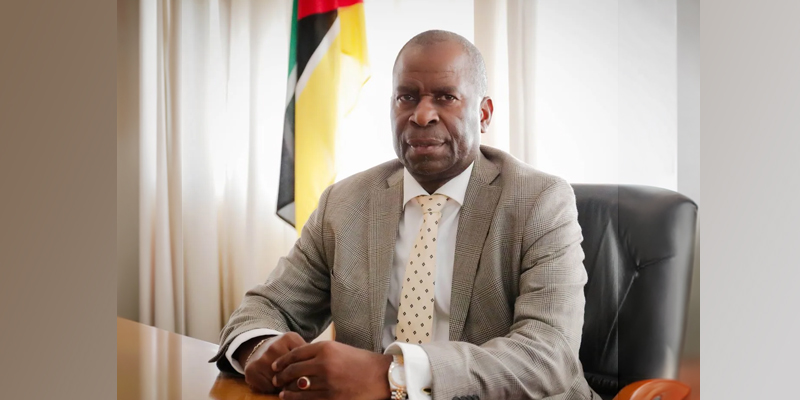
30 Jul Interview with Manuel Soares, Chairman and CEO of Moza Banco Mozambique
Founded in 2008 as Mozambique’s first bank with majority local private capital, Moza Banco has since become a systemically important institution within the national financial system. What is your strategic vision for Moza Banco at this stage of its evolution and what immediate priorities are shaping the bank’s direction?
Since 2022, we have started a bank transformation project — a more digital bank — because in a country the size of Mozambique, thinking that banking will have branches all over the country is not realistic. The only way to reach the entire population and provide access to banking will have to be through digital channels, through mobile phones and especially through USSD (which allows phones to communicate with a service provider’s computers), which is something that everyone already knows how to use. Since the arrival of telecommunications, M-Pesa and e-Mola have had strong penetration in the country.
My vision is that we have to prepare ourselves to compete with fintechs and telecommunications companies such as M-Pesa and e-Mola, which can easily enter the financial sector and offer small loans to clients across the entire country through mobile phones. Any bank that wants to survive and remain in the market has to follow that path, rather than having a physical presence. They are the ones who will set the standards, because people like to have cash in hand and for that reason we are making a strong investment in modernization to make this bank strong and technological and to make it the pride of all Mozambicans.
We have very strong brands here, such as HSBC, but historically, the banks that had capital problems were mostly Mozambican banks, therefore it is necessary to show that we Mozambicans also know how to do banking properly and that we will be the ones who will remain. We cannot say, “Well, we can’t stay in Mozambique, we are going to sell the business.” No. We are the ones who must always stay, because our base and our origin are Mozambican.
Secondly: when we look at the country, the economic prospects and the country’s development, because of the major projects we have — especially in the north regarding gas, but throughout the entire country with electricity and our geographic position, our sun and our rivers — allow us to be electricity providers for all our neighboring countries. This means that our business sector, especially the gas sector with Total and Exxon, is looking at an investment of $50 billion in Mozambique, so this will have a very strong impact. I believe that our entrepreneurs will have to start thinking about no longer being only entrepreneurs in Mozambique — they will have to become, at the very least, regional entrepreneurs. It will be much easier if a local bank that knows them also follows that path of transforming itself from a purely Mozambican bank into a regional bank as well — one that bets on and supports Mozambican companies in the countries around us.
How is digital transformation strengthening Moza Banco’s position in the market and what comes next?
When I joined this bank in 2021, in all the meetings I had with the bank’s front line, everyone complained that something as simple as our USSD channel did not work on weekends. It was not available. At the end of the month, on the last day of the month, when there was a concentration of tax payments, VAT and others, we also did not work because we had serious infrastructure problems. We made that investment and we went from 120,000 clients to 300,000. USSD is growing exponentially. People started trusting the bank because when they need it, the bank is working and before that did not happen.
The most important thing is that the modernization we carried out last year, with the new middleware that we implemented in the bank, has allowed us to provide that support and build partnership relationships with companies, Therefore, I have to think that I need to strengthen my relationship with not only M-Pesa, but also with other fintechs that are emerging in the market, which will allow clients in the districts to access banking easily through an intermediary and I am the final support and guarantor of loyalty.
I would say that in Mozambique there was a “before 2025” and a “post-2025.” The difficulties we had as Mozambicans, especially when going to government offices, the identification card, driver’s license, all of that is much more simplified now. And now banking will be much simpler and it will solve problems of fraud and falsification that exist today. It will be a different world. The new projects we have are important because they will strongly grow GDP, but the biggest impact for the population is our projects of integration into the modern world, let’s call it that and closing the digital gap, because now there is internet access in more places than before. The rest of the country did not have this access and used to remain in the past and children who had the possibility of growing up and being born in Maputo had competitive advantages, while those who were born in other areas did not. Above all, this is an opportunity for the country — an opportunity to identify talents that are being lost in the districts.
Mozambique’s banking sector has strengthened in recent years, supported by improved capitalization, digital expansion and enhanced regulatory oversight. How do you assess the sector’s current trajectory and what key trends or pressures will shape it in the coming years?
The truth is, I think there are too many banks. Twenty or 30 banks is too much. I believe that at some point there will have to be some consolidation, especially among the smaller ones, because among the five largest banks it is almost impossible for there to be consolidation, for competitive reasons. Since 2016, traditionally, banking supervision has been good in Mozambique. I believe we were one of the first countries in Africa to move into Basel II and now we are beginning the process of moving into Basel III. There was a lot of investment in modernizing the financial system due to regulatory requirements and in that regard, I believe that over the last 10 years, a banking mindset was created focused on risk management.
The CEOs of the banks are those who manage risk and business first, because we always have to look at the impact of the decisions we make. That is something that we cannot lose. I always say: here in Mozambique we are capable of having a bank with good risk management principles.
The law allows in Mozambique that with €100 I can open a company and people should know that yes, I can open a company with €100, but you cannot think that a company with €100 in capital is going to go to a bank and ask for €5 million — that is not possible and that will have to change. Our mission is to protect depositors — the money of those who have trusted us. After that, if someone wants a loan, there are very clear rules: if they meet them, they get it; if they don’t meet them, we will still be friends and good luck. But clearly, there has been technological progress and it is much more integrated in terms of check management and real-time transfers — that has improved a lot.
The implementation of the Mozambique Interbank Network, a digital integration, means that if I enter Moza and I am a client of another bank, this MIB allows the Bank of Mozambique at any moment to know what my position in the system is. Before, it was not possible, but it is now. This is a digital identification and trust issue: if all of us only had one national identification card, MIB would not be necessary. That is why the modernization and digitalization of the entire public system gives much more confidence, because it allows the bank to identify and know who the person is, and it brings more transparency.
In 2025, Moza Banco launched the FAMOZA Seal and introduced a dedicated financing line for women-led small businesses, reinforcing its commitment to SME growth and financial inclusion. What impact have these SME initiatives had so far and how do you plan to build on that momentum?
We believe that being “FAMOZA” helps us gain knowledge about the clients who work with us — some because of their activity, because of the more transparent way they operate in the market, their way of working and because it serves as a reference for those who are present. We believe we have to reward those who follow good practices and that is the way we found to do it and it was more successful than I expected. People felt it very strongly — the fact of having been selected and having received the award.
Moza Banco operates within a financial system increasingly connected to regional trade and cross-border capital flows. What role do international partnerships and correspondent relationships play in Moza Banco’s growth strategy?
This bank was subject to an intervention in 2016 and because of that, for many years our correspondent banking relationship was with Novo Banco, in Portugal, which was part of the bank’s shareholders as a minority shareholder, but it was involved. Fortunately, since 2022, we have been diversifying the number of correspondent banks. We re-established relationships with Deutsche Bank, for example, and with Bank of America, which are improving our capacity to operate in the market and to support importers.
This is good news, because we have also gone through this path of building credibility for the bank. In addition to that line, we will also have credit lines with Afreximbank Africa and other lines with several correspondent banks as well. This is critical because, unfortunately, no bank in Mozambique can, on its own, issue confirmed letters of credit due to the Republic’s credit rating. Therefore, we need to have a correspondent bank that acts as the confirming bank, and that is happening, and it is allowing us to grow in these services.
Japan has expanded its engagement in Mozambique through infrastructure, energy investment and development cooperation. Where do you see opportunities for collaboration between Moza Banco and Japanese financial institutions or investors?
I believe that Mozambique is a country that has everything. We have gas, we also have oil, we have rare earths, we have coal — even though coal is disappearing from the global market, we still have it. And we have a lot of land and water. The truth is that we have a lot of water. We should have more reservoirs than we currently do, but we have a huge amount of water and a lot of land. I think it makes much more sense for us to supply food to Japan from Mozambique than from Brazil, for example. We have land, which is something Japan does not have, and that can be a good opportunity and a good area for investment.
Mozambique could be a much bigger exporter than it currently is and diversify a bit what it exports and mitigate the risk, because right now we only export gas and import everything else and we can’t do that forever. In Japan, they have the technological expertise that all farmers need, especially information and modern technologies. There are countries that know much more modern technologies than we do and I think it makes sense for Japan to also have a position in gas — everyone benefits.
It’s not only that in Mozambique there is gas and energy — there is also tourism, there are safaris. People don’t know that. Everyone thinks about South Africa. I didn’t know there were such interesting safaris. The truth is that we also are not very good at selling ourselves. We always depend on the same thing: at international fairs they talk about Vilankulo and in the north, Cabo Delgado is more popular. Looking at tourism integration, we also have the province of Manica, which is almost on the border with Zimbabwe, and which you can easily connect with Victoria Falls, with Zambia and then you come through Manica, which has areas of biology and paleontology and from there you can also go to Gorongosa National Park. Gorongosa is a good example of the recovery of animal life. It was probably the part of the country most impacted by the civil war, where the animals were decimated almost 20 years ago. There has been an American foundation for more than 20 years that has been repositioning the Gorongosa National Park and restoring animals. It is a case study.
What message would you like to leave to the readers?
That they should believe in Mozambique. We have had some problems, like everyone in the world, but the potential is very, very big. We need investment — we cannot achieve it alone. They should believe in us. They should bring good practices. That is the truth. Many people think we have no awareness and that’s far from being true.
Sorry, the comment form is closed at this time.