
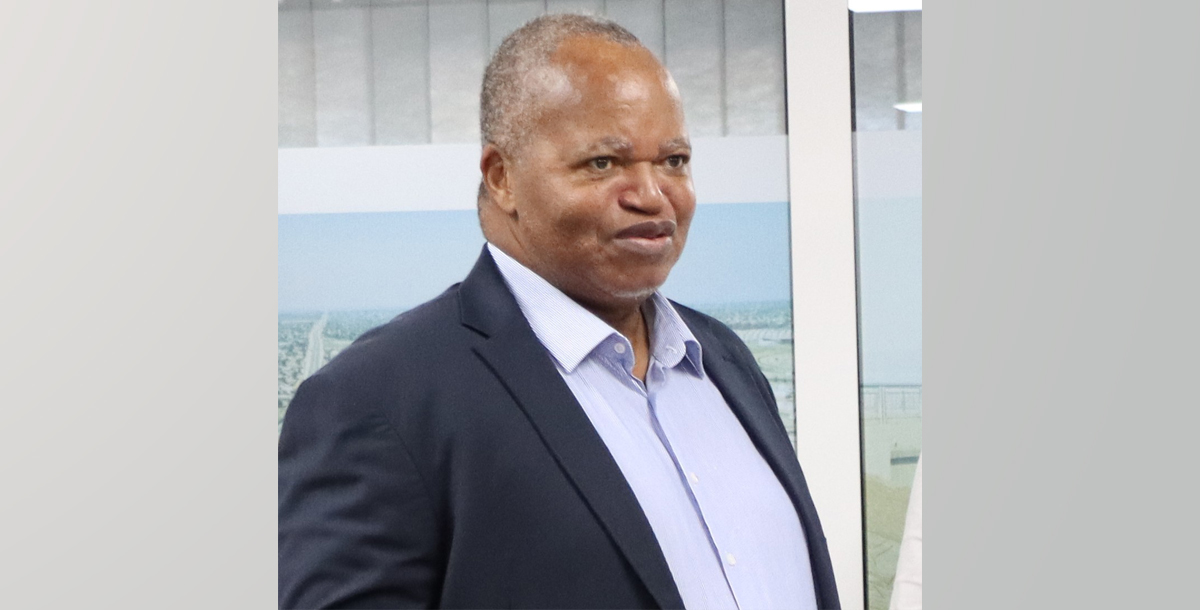
30 Jul Interview with Prof. Ângelo Macuacua, Chairman, Fundo de Estradas, Mozambique
Mozambique’s classified road network is estimated at around 18,000 miles, yet only roughly a quarter is paved, while road transport carries more than 80% of national freight and passengers. How is Fundo de Estradas prioritising preventative maintenance versus expansion to strengthen reliability and reduce lifecycle costs?
The Roads Fund is the institution mandated by the state to mobilize financial resources to ensure the maintenance of the road network, including both classified and unclassified roads. Regarding funding sources, we receive revenue from fuel taxes, tolls and road taxes, as international transport vehicles pay a fee when using our roads. With this revenue, we maintain the roads, prioritizing major corridors that connect ports to hinterland countries and to large cities, where there is greater movement of goods and where most of the population is concentrated. These roads have therefore been prioritized for maintenance, ensuring lower production costs and, at the same time, reducing the cost of goods and services for the population.
EN1 and port-linked corridors to Maputo, Beira and Nacala are critical to export competitiveness and industrial logistics. Which strategic corridors are currently receiving priority financing and what measurable impact do you expect on trade efficiency and logistics cost reduction?
Our number one priority is National Highway Number 1. It is the road that has been receiving the greatest attention in terms of prioritization. In addition to EN1, we also have, for example, National Highway Number 7, which connects Zambia, Malawi, the Democratic Republic of Congo and, in a way, also Zimbabwe. After EN4, EN7 is another very important road for the development of trade, not only at the national level but also with the hinterland countries. These are examples of roads that have received higher priority in the allocation of resources, which are always scarce in the country.
Recurring cyclones and floods significantly increase reconstruction costs and disrupt economic activity. What share of the fund’s annual budget is allocated to climate-resilient engineering standards and how are climate risks being internalized into financial planning?
From our current road fund budget, we allocate between 7% and 10% to emergency repairs to address damage caused by extreme weather events and heavy rainfall. Furthermore, when we rehabilitate and reconstruct roads, we apply design standards that already incorporate resilience. Even when deciding which roads to rehabilitate, in addition to traditional socio-economic criteria, we consider resilience as a key factor in budget allocation and investment decisions for the road network, ensuring that the available resources are used efficiently and that the infrastructure remains resilient.
The Fund’s revenue model relies heavily on fuel levies and user contributions. Is the current funding structure sufficient to address maintenance backlogs and are reforms being considered to enhance long-term predictability?
We face the challenge of further increasing revenue. Currently, our revenue covers about 40% of our needs, which means there is a significant gap in maintenance funding. We have received government support through tax revenues and other contributions to help maintain the roads.
When developing projects with the World Bank, we use an approach known as OPRC, which involves construction followed by maintenance for a defined period. This ensures that the road is built together with a maintenance plan covering several years, so that resources from development partners are also used to support long-term maintenance.
Other initiatives involve private sector participation in the construction and management of roads. We hold the concession for EN4, granted by the governments of Mozambique and South Africa, which connects the Port of Maputo to South Africa. It is a success story that will mark 30 years next year and has been fundamental to the development of the Port of Maputo.
In the case of the Port of Beira, the road linking Beira to Machipanda, EN6, is also a concession road and part of the Mozambican road network, ensuring a dedicated flow of resources for its maintenance.
We are implementing these initiatives to strengthen private sector participation in road maintenance. With the integration of the Roads Fund into the Ministry of Transport and Logistics, we are exploring additional opportunities to utilize the fiscal space generated by port concessions, allowing them to also contribute to road maintenance. This is because port development relies on the existence of reliable highways. We are currently in this planning phase, assessing how the economic activity generated by the ports can also support the maintenance of the road network.
Large LNG and mining investments in northern Mozambique are driving demand for heavy-duty transport infrastructure. How is the fund coordinating with major private investors to ensure industrial-grade road capacity without placing excessive strain on public finances?
We are paying close attention and remain in dialogue. We have already received support, for example, for the bridge over the Montepuez River. About four or five years ago, it collapsed due to an extreme weather event and we had to rebuild it with support from TotalEnergies. With support from Sasol, we also rehabilitated a 20-mile section of the EN1 highway.
Regarding gas exploration, we are exploring the possibility of using condensate, one of the byproducts of gas production, to manufacture asphalt, as one of the most expensive inputs in the country is asphalt itself. If it can be produced locally, this would reduce raw material costs and allow us to increase the share of paved roads you mentioned, paving more roads and expanding the paved network.
Currently, around 25-30% of our roads are paved. The average for developing countries is about 50%, so we still face the challenge of paving more roads and making them more resilient, especially in the context of climate change. Dirt roads generally last only until the next rainy season. Road construction also contributes to job creation, especially in rural areas. When companies carry out road maintenance, they hire local workers, allowing them to earn additional income without leaving their communities or abandoning their agricultural activities. This extra income helps them build houses, purchase motorcycles and bicycles for rural transport and increase rural production.
Japan is globally recognised for advanced infrastructure engineering, resilient design and long-term infrastructure finance. What forms of cooperation with Japan would be most impactful?
Yes, we need a great deal of support. We have been receiving significant support from Japan for the development of the Northern Corridor roads. We also implemented a bridge construction program that benefited from Japanese funding. We have been sending Mozambican road sector technicians to Japan for training, particularly in the area of bridges, as we recognize the importance of resilience. We see Japan as a strategic partner that can help us strengthen the resilience of our infrastructure, given its experience.
We believe that a plan to adapt the most critical road infrastructure, developed in partnership with Japan and supported by Japanese funding, can further strengthen the resilience of our road network. We are already familiar with Japanese technology, having used it in bridge construction and it has proven to be highly effective.
We invite Japanese companies to undertake or participate in these projects and if concessional financing is available, as it has been in the past, even better. The road sector is capital-intensive. While labor is important, it requires substantial capital investment and at Mozambique’s current stage of development, the country still needs strong support from partners such as Japan to expand its infrastructure.
How is Fundo de Estradas structuring investment-ready projects capable of attracting foreign institutional capital, including Japanese investors seeking long-duration infrastructure assets with predictable cash-flow profiles?
We have identified roads where we would like to encourage private sector participation through public-private partnerships for the development of our road network. We believe that the Port of Beira has enormous potential. The Port of Nacala also has significant potential. It was recently rehabilitated with support from Japan, but we also need to focus on the highways that connect to the port. The railway is important as well, but the highway, particularly because of its flexibility, remains essential. With the Nacala Deepwater Port and the ongoing development of the Port of Beira, which is placing strong emphasis on expansion and improved management, we see considerable opportunity. The Ministry is promoting an initiative to build an access road to the Port of Beira.
To reduce waiting times for access to the Port of Beira, we believe that the other roads serving the port, such as EN6, EN7, EN8 and EN9 should be upgraded to enhance its competitiveness. To achieve this, we need investors with whom we can structure rehabilitation projects for these roads and further strengthen the competitiveness of our ports.
Digitalization is a safeguard against corruption, increases efficiency and reduces costs across institutions. How will you use digitalization to promote inclusive efficiency and improve processes?
Yes, digitalization is an area we are actively advancing. In the past, our processes, such as revenue management and toll collection, were manual and we are now digitalizing them. At our headquarters, we have a toll monitoring room where transactions can be tracked. A toll operator, even if located 300 miles away, is aware that their activity may be monitored at any time. Even when it is not monitored in real time, it is recorded. This allows us to automatically calculate traffic volumes, compare them with the revenue collected and verify whether there are any discrepancies.
We have made progress in improving collection efficiency through digitalization and in addressing irregular practices that may occur during the collection process. Our financial management systems in the road sector are fully digital, using dedicated software, although we believe there is still room for improvement.
We are now developing a transparency portal where all the projects we fund will be available. Anyone seeking information about a road project will be able to access the portal and review the project details, cost, bidders, justification for the investment, selection criteria, feasibility study, as well as environmental and social reports. It is an important initiative that we are beginning to implement.
We plan to launch the portal this year, ideally in the first semester. The platform has already been developed and currently includes about 40 projects. It is not under consideration; it is already being implemented. Not only for roads, but we are also inviting other infrastructure institutions to use the portal. We have the support of an international initiative known as the CoST Initiative, with which we have been developing the platform.
Sorry, the comment form is closed at this time.